Build a property price map by inspecting Domain’s search requests, testing why plain server requests return HTML, and using a browser-established session for dynamic listing searches.
Goal of the project
Demo a useful property price explorer through an interactive map. A user chooses rent or buy, bedroom count and property type; the app fetches matching Domain listings, calculates suburb averages and updates the map.
Methodology
The plain request did not return “nothing”. It returned HTTP 200, but the body was HTML, not the listing JSON needed by the app. The HTTP exchange succeeded; the response did not contain the requested data.
We used JavaScript in two places: Chrome’s DevTools Console to test a request from the working Domain page, and Node.js in the server terminal to test the same URL outside that page.
To find the request, we opened a Domain rental search, opened DevTools and selected Network. We filtered for the search request, inspected its Query String Parameters, then checked Preview/Response to confirm it contained listing data. We copied the request URL and parameters into JavaScript for controlled tests. The request used a suburb bounding box and filters such as bedrooms and property type.
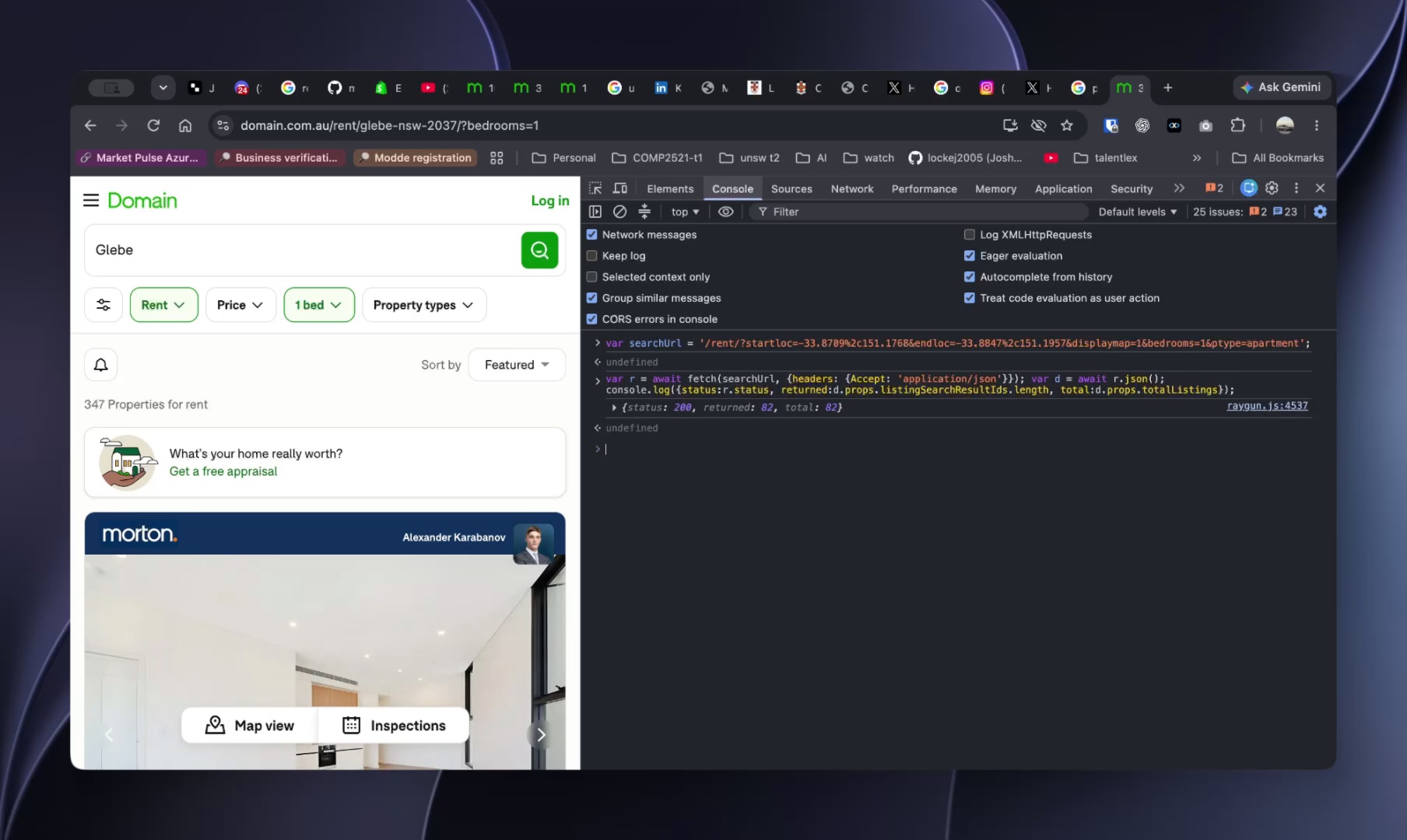
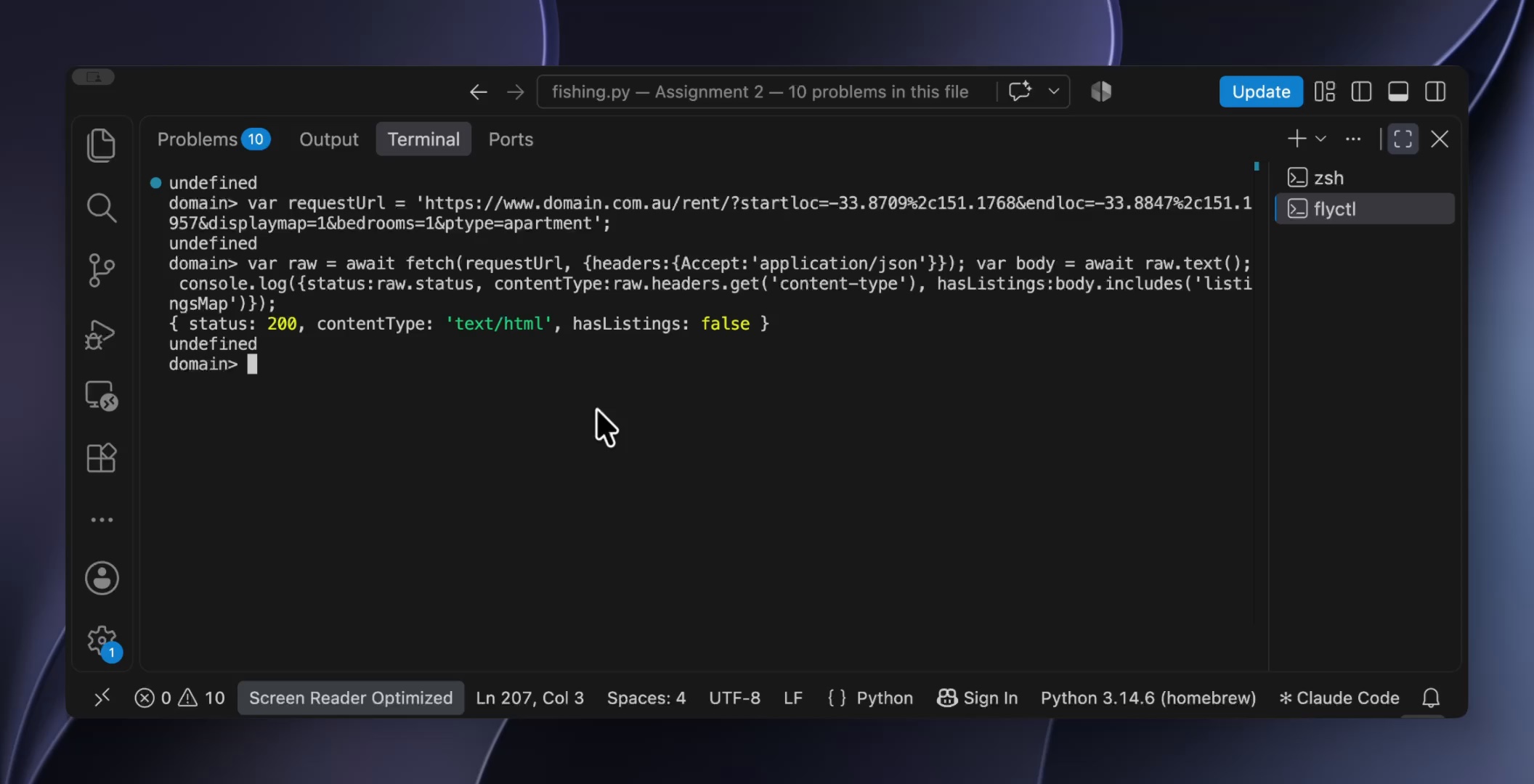
The browser test used fetch(searchUrl, { headers: { Accept: "application/json" } }) from the Domain page. The browser supplied the page’s normal origin and session context. The equivalent plain Node.js fetch returned status 200 with content type text/html; the body did not include listings. This proves the responses differed. It does not identify the exact server-side reason.
We then tested a session handoff: use Chrome to establish a session, export that session to the direct HTTP client, close Chrome, and send the search from Node.js. That request returned listing JSON after Chrome had closed. This is browser-assisted session setup followed by direct HTTP requests; the searches do not run through Chrome.
Request working in Domain
This JavaScript fetch ran from the Domain page and returned JSON containing 82 listing IDs.
Same URL from plain Node.js
The Node.js fetch used the copied URL and an Accept: application/json header. It returned HTTP 200, but the content type was text/html and no listing data was present.
We tested the request in stages:
- Inspected the real Domain search in Network and noted its URL, parameters and JSON response.
- Copied the URL and parameters into a browser Console fetch and checked the parsed response.
- Ran the same URL with plain Node.js and checked the status, content type and response body.
- Compared the responses. The browser returned JSON; plain Node.js returned HTML.
- Tested the session handoff, closed Chrome, and then sent direct Node.js requests.
What worked and how
The key change was to use Chrome to establish and export the browser session, then perform the actual searches with a direct HTTP client using that session. Chrome was closed before the search calls. This is a browser-assisted session handoff; the data requests themselves are direct HTTP requests, not requests sent through the open browser.
In the recorded terminal test, the plain request returned HTML and no listings. With the hybrid flow, one bedroom returned 82 listing records in about 692 ms. Changing to two bedrooms returned 71 records in about 236 ms. The browser was closed for both searches.
Market Pulse applies the same flow to suburb searches, then queues and caches work as the map needs it. It calculates averages from the returned advertised listing prices. These are asking-price samples, not completed sale or lease prices, and the prototype does not query Domain’s internal database.
Key demo points
- Compare the working browser request and the plain Node.js response shown above.
- Explain that the URL and parameters were not enough; the browser had session state the plain request did not.
- Show the hybrid code establish/export the session, close Chrome and then request the JSON directly.
- Change bedrooms from one to two and show the listing count change from 82 to 71.
- Show the map applying the returned listing data to suburb price estimates.